

Side Steps vs Running Boards - What's the Difference and Do You Actually Need Either?
Side Steps vs Running Boards - What's the Difference and Do You Actually Need Either?
If you've been shopping around for a way to make getting in and out of your 4x4 or ute a bit easier, you've probably come across both side steps and running boards. The two terms get used interchangeably a lot, but they're not the same thing, and the difference matters when you're trying to figure out what actually suits your vehicle and how you use it.
This isn't a complicated decision, but it's worth understanding what you're actually comparing before you spend money on either.
What's the actual difference
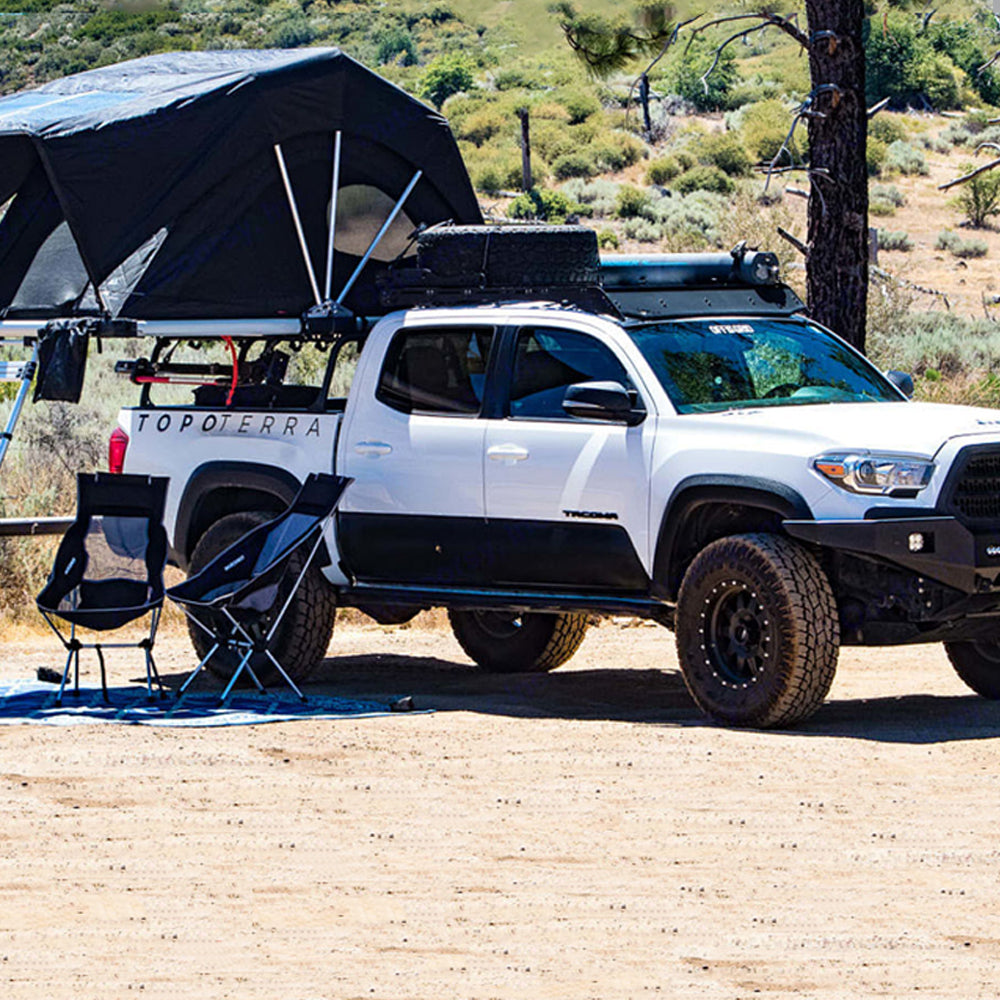
Side steps are shorter, more compact step platforms that mount to the side of the vehicle - usually positioned under the door or doors. They give you a defined spot to put your foot when getting in or out, without running the full length of the vehicle. A lot of 4x4-specific side steps also come with a brush bar component, which adds a protective element along the side of the vehicle at the same time.
Running boards are longer - they typically run the full length of the cab, sometimes extending further. They sit closer to the vehicle and have a flatter, lower profile. The step surface is wider and more continuous, almost like a narrow shelf along the bottom of the doors.
Both do a similar job in terms of helping you get in and out of a taller vehicle, but the design, purpose and fit are different enough that they're not really interchangeable depending on what you're after.
What side steps actually do
The main job of a side step is exactly what it sounds like - giving you a solid place to step when you're climbing in or out of a lifted or high-riding 4x4 or ute. If you've got a suspension lift, bigger tyres or just a naturally tall vehicle, that gap between the ground and the door sill adds up fast. Over the course of a full day of getting in and out of the vehicle on a worksite, that starts to take a toll on your knees and hips.
Side steps solve that problem simply and directly. You step up, you step down, job done.
The ones that come with a brush bar component do a bit more. The brush bar sits along the lower side of the vehicle and adds protection against rocks, scrub and debris that get thrown up on rough roads or off-road tracks. If you're driving in regional or rural areas, working on sites where rocks and gravel are a regular hazard, or doing any kind of off-road use, that side protection is actually worth having - not just for the look of it.
A good set of side steps with brush bars also adds a bit of structural presence to the side of the vehicle. It's not the same as full side protection, but it does give you something between your doors and whatever you're driving through.
What running boards offer differently
Running boards cover more ground - literally. Because they run along the full length of the cab, they give passengers more options for where to put their foot when getting in. That makes them particularly useful if you've got kids, older passengers or anyone who doesn't find it easy to step up in a single motion.
They tend to have a lower, flatter profile compared to side steps, which can actually make them easier to use for passengers who aren't used to a taller vehicle. There's a bigger surface area to step onto, and the approach is more gradual.
The trade-off is that running boards are generally more of a passenger vehicle or family-oriented accessory. They're common on SUVs and people movers for exactly that reason. They don't typically include the same kind of protective brush bar element that purpose-built 4x4 side steps have, so they're not really designed with off-road durability or side protection in mind.
Who actually benefits from side steps
If your vehicle is lifted, has bigger tyres, or just sits noticeably higher than a standard sedan, side steps make daily use genuinely more comfortable. That's the most straightforward case.
For tradies who are getting in and out of the vehicle repeatedly across a full day - multiple job sites, loading and unloading, checking in on crew - reducing the physical effort of that repeated climbing matters more than most people expect. It's one of those accessories that feels like a luxury until you've been without it for a week.
If you've got passengers who find it hard to get into a tall vehicle - whether that's kids, older family members or clients you're transporting - side steps make that easier without having to explain how to get in every time.
And if you're doing any off-road work or driving on rough rural roads, the side steps with brush bars available through Tradies Choice add that extra layer of side protection that makes sense when you're regularly driving through scrub, gravel or rough terrain.
Who probably doesn't need them
If your vehicle sits at a standard ride height and you're doing mostly city or suburban driving, you might find that side steps are solving a problem you don't really have. Standard-height utes and 4x4s are already pretty accessible for most people, and if you're not regularly carrying passengers who struggle with the step up, the case for them gets weaker.
It's also worth being honest about your actual off-road use. If you're not regularly driving on rough terrain, the brush bar protection element is less relevant to your situation, and you might be paying for a feature that doesn't do much for you in practice.
Budget-wise, side steps are a reasonable investment if they're genuinely solving a daily friction point. If you're stretching the budget and your use case doesn't really call for them, it's probably worth putting that money toward something that makes more of a difference for how you actually drive.
Things to check before buying
Vehicle fitment - Side steps are vehicle-specific. A set that fits a Hilux won't necessarily fit a Ranger or a Triton, so make sure whatever you're buying is designed for your make and model. Getting this wrong means the mounting points won't line up properly.
Ground clearance - Side steps sit lower than the main body of the vehicle, which means they can reduce your clearance underneath. If you're doing any off-road work, check the clearance on whatever steps you're considering before you buy. Some designs are better than others for maintaining usable clearance.
Material and finish - Most quality side steps for 4x4s are built from steel or aluminium. Steel is generally tougher and handles scrapes and impacts better. Aluminium is lighter. For work use and off-road conditions, steel tends to hold up better long term. Pay attention to the finish too - powder coating or proper rust protection matters if you're regularly exposed to mud, water and road grime.
Brush bar or no brush bar - If side protection is part of why you're buying, make sure the set you're looking at actually includes the brush bar component. Not all side steps have it, and it's not something you can easily add on later. If you want both the step function and the side protection, buy a set that's designed to do both from the start.
Step surface grip - This sounds minor but it matters if you're using them every day in wet or muddy conditions. A step with proper grip texture is a lot more useful than one that's slippery when wet.
Side steps and running boards both exist to make a tall vehicle easier to get in and out of, but they're aimed at slightly different situations. Running boards suit family vehicles and passenger use where coverage and ease of access are the priority. Side steps - especially the kind with brush bars built in - are better suited to working 4x4s and utes where durability, off-road protection and day-to-day practicality matter more. If your vehicle is your daily work tool and it sits high off the ground, side steps are usually the right fit. If you're mostly thinking about passengers and comfort on a standard-height SUV, running boards are worth a look instead.